Tuesday, August 18, 2015

    Middlemarch 
by George Eliot
(pen name, Mary Anne Evans)

     My path to Middlemarch was circuitous.  I read a review of another book, My Life in Middlemarch by Rebecca Mead and although Ms. Mead's book sounded interesting, I couldn't read it.   How could  I read a book written by someone who had spent her entire life obsessed by Middlemarch when I had not actually read Middlemarch myself?   So I purchased both books, then jumped  into George Eliot's nineteenth century, eight hundred page tome.
      My reaction to Middlemarch was one of delighted surprise.  I was entertained and above all, I was enchanted.  Set in the Midlands of England, the same magical countryside that housed the rabbit warrens of Watership Down, Middlemarch is a country town that is at once bucolic and busy.  Inhabited by a fascinating assortment of characters, both working class and landed gentry, the inhabitants of Middlemarch never fail to behave in interesting and surprising ways.
     And whether you are hoping against hope that Dorothea does not marry the much older Mr. Casaubon, which she unfortunately and unhappily does, or you are cheering for young Will Ladislaw to win Dorothea's heart once she finally becomes a widow, there is not a single page that does not draw you into their dramatic lives.

     I'll warn you that reading Middlemarch is addictive.  It is also fun.  Each page pulls the reader willingly along on a carefully crafted ride.  Eliot's storytelling skill compels you to turn to the next page, plunge into the next chapter, and complete the next section, and there are eight sections in all.
      Immersed joyfully in Eliot's plot lines,  I especially enjoyed Book I: Miss Brooke, which introduces Dorothea, a serious-minded innocent, Book V: The Dead Hand in which you hope and pray for Mr. Casaubon to hurry up and die, for goodness sake and Book VIII: Sunset and Sunrise where loose ends are finally tied up, the book provides everything a reader needs for a delightful literary experience.  Eliot creates sympathy where there should not be any, offers forgiveness where there should be regret and judgement, and even inserts sardonic humor into every chapter.  By the last page, I was so invested in the fates of Dorothea, Will Ladislaw, Dr. Lydgate and Mary Garth that I was ready to scream if the story lines were not concluded to my satisfaction.
     Middlemarch has become one of my favorite books and I am already anticipating reading it again.
 I freely admit to being obsessed by the foolishness, the innocence and the wisdom that is Middlemarch.


    Now that I was satiated and enthralled by Middlemarch, I felt comfortable beginning Rebecca Mead's My Life in Middlemarch.  I looked forward to reading an analysis of Middlemarch, written by someone who was at least as charmed by George Eliot as I was.  Unfortunately, that was not the case.  Mead's analysis of Eliot and her prose is lacking something.  Her take on Eliot and Middlemarch is dark and rather unpleasant.
     As much as Mead insists that she has always been obsessed with Middlemarch, I find that claim hard to believe.  Her observations and analysis lack joy.  Wouldn't a literary work that was central to your emotional life bring you joy?  And wouldn't that joy shine through in your description of the book's characters?  I did not see even a glimmer of that joy.
     I did, however, enjoy the biographical aspects of My Life in Middlemarch,  and if this book had been advertised as a biography, I would have been satisfied.  I suggest that you read Rebecca Mead's book on Middlemarch only if you are interested in reading a reference book, as My Life in Middlemarch is at the very least that.


Tuesday, August 11, 2015

     Minero
An Authentic Mexican Hotspot on East Bay

     Are you looking for the perfect tortilla?  Look no more.  Minero grinds corn in house from Geechie Boy Mill (my favorite), Anson Mills and Masienda to make perfect, tender 6" tortillas. Topped with grilled pork, chorizo, pickled vegetables or just folded and dipped in Queso Fundido, Minero's tortillas are tough enough to hold up without tearing yet toothsome enough to melt in your mouth.
     Minero, located at 155 E. Bay St., is an intimate space that fills up quickly.  Reservations are not taken, so plan on arriving early for lunch (11:30am),  mid-afternoon (3pm), or early bird style for dinner.  My dining partner and I arrived at 11:30am and were seated immediately.  Our table was tucked in the corner, up against the bricked wall which made us feel a bit cramped, though.  (Next time we will ask to be seated more towards the center of the room.)  The dining room was completely full by the time we finished our lunch, with a dozen guests waiting to be seated.
      The menu offers three side dishes, along with a long list of tacos, a few burritos, a salad and  Lamb Shank Barbacoa to share.  My menu favorites were the Queso Fundido, the Chilaquiles and the Taco al Pastor.  The Queso, thick, melted cheese seasoned with roasted poblano peppers and moderately spicey chorizo, is served with a stack of warm tortillas.  Riich and filling, there is enough Queso for two people to share.
     Save one tortilla from the half dozen served with the Queso to scoop up what you may miss from Minero's tacos.  Served on a corn tortilla, the taco ingredients overflow and are exceedingly fresh.  Order the Taco al Pastor for a sweet and creamy combination of avocado and grilled pineapple, served atop a mound of marinated and grilled pork and all for $3.50.
     We ordered the Chilaquiles on both our visits to Minero and were pleased with the flavor, texture and size of the dish.  Heirloom beans, pork and avocado were layered over house made tortilla chips. Then alternating crema, salsa and queso fresco were drizzled over all and topped with a fried egg.  Bring your appetite for this one.
      Minero also serves tall, cold bottles of Mexican Coke, made with cane sugar, not corn syrup, a real treat for teetotalers like me.   Executive Chef Sean Brock has hit a homerun with this authentic Mexican hotspot.  
   

Monday, August 10, 2015

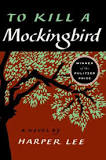
     Go Set a Watchman, 
A Rehearsal for To Kill a Mockingbird

     I would like to say thank you to Harper Lee for sharing her manuscript, Go Set a Watchman, with us, her reading public.  How lucky we are to be given a rare glimpse at the beginning of her literary brilliance.  The sharp, Pulitzer Prize winning prose of Lee's To Kill a Mockingbird was born here, in Go Set a Watchman.
     Lee's characters have grown, changed and in some cases, become more real. Scout and Atticus live on opposite ends of the Eastern seaboard and are poles apart on segregation, racial equality, all things Southern and life in general.  "Scout", now known by her given name, Jean Louise Finch, lives in New York City and is returning home by train to Maycomb County for a visit.  Determined to remain true to herself, bound to speak her mind, Jean Louise is torn between her love of family, her affection for her childhood friend Hank and the disturbing revelation of bigotry in tiny Macomb, Alabama.
     Once Jean Louise arrives at her childhood home, no one behaves the way she expects them to behave and nothing is as she remembers it.  The same can be said for the reader's impression of Maycomb County in the early 1960's.  Nothing is the same.  But go beyond your disappointment in the characters and read on.  Remember that Go Set a Watchman was the foundation for To Kill a Mockingbird and enjoy the discovery of Mockingbird's basic structure, its bones, its blood and its muscle.
     And although the reasons behind the original editor's reluctance to publish Watchman become clear later in the book, the story's potential is also evident.  Many passages exist in Watchman that reappear verbatim in Mockingbird.  Some even draw conclusions that are opposite from the ones Lee drew in the childhood stories of Scout.
     Certainly a good editior would have tightened Lee's prose in Watchman, eliminating a few examples of wordiness and repetition.  It is, after all, an unedited first draft.  But I understand why Go Set a Watchman was published "as is." Ms. Lee did not wish to rewrite the book nor do we need her to do that.  The book stands alone as a rehearsal for To Kill a Mockingbird, a story that began and now ends with the wisdom of Scout Finch.

Thursday, July 16, 2015

                   
                      Happy Birthday to The Catcher In The Rye!

      Sixty four years ago today, Little, Brown and Co. published a little 200 page book about the unraveling of a teenaged boy following his brother's death.  Told from the viewpoint of the main character, Holden Caulfield, (You may have heard that name a time or two in the last few decades.) the story is set in post World War II New York City.  Reading The Catcher in the Rye became a rite of passage for people who questioned authority, strained against social mores and struggled with the finality of death, which is probably everyone at some point in their lives.
     The popularity of his book caught J.D. Salinger a bit off guard.  He tried unsuccessfully to keep up with the fan mail, the fame and the notoriety that his story generated.  Shaking off all responsibility for explaining and discussing his work, he became somewhat reclusive and attempted to continue his writing career without interference from the outside world.  (which became everyone but his agent, his publisher and his family)
     In order to understand the aura that existed around Catcher and Salinger, I read Joanna Rakoff's enlightening memoir, My Salinger Year.   Ms. Rakoff details her first big job after college, working as an assistant to J. D. Salinger's literary agent.  Set in the mid nineties, also in New York City, Rakoff's observations about the world of authors, literary agents and poor college graduates will ring true for anyone interested in human nature, the creative process and the rarefied literary world.

     I suggest reading the two books consecutively, beginning with The Catcher in the Rye.  Reading Catcher again as an adult was very different from reading the book for the first time as a seventh grader.  Catcher almost seems like a different book now.   Reading it as a twentysomething and again as a mother of three college students completely changed my pre-teen impression of it.   My opinion changed from "What's the big deal about this book?" to "Oh, poor Holden!"
     So happy birthday to you, dear Catcher in the Rye.  See you again in a few years.  I look forward to reading Holden's story as an older and perhaps wiser me.  I wonder what Salinger will have to say to me then?

Tuesday, May 26, 2015

Roasted Duck at Chez Nous

     I don't usually take pictures of my food.  I rely on the photos taken by the restaurant, or don't use them at all.  I usually let the food's flavor speak for itself.  Not this time.  The Duck Breast with Roasted Grapes and Mushrooms, on turnip pureé, (which made the dish as perfect as God's original creation in the Garden of Eden...do I rhapsodize too much?) served at Chez Nous on Friday looked like a still life in a Dutch Masters painting.  It was just that perfect.  I almost didn't want to disturb it.  Almost.
     What would your first bite of this masterpiece be?  Mine was a grape.  On the surface, roasting grapes seems odd.  Once in my mouth though it was anything but odd.  The grape's flavor was enhanced by the roasting and its' texture was still firm.  My next bite was a piece of roasted duck whose edges crackled in my mouth and center melted on my tongue.  The mushrooms were King Trumpet, and according to my server, perhaps originated from Mepkin Abbey, perhaps not, which added mystery to the dish.  When swirled in the creamy turnip pureé, I wondered if anything else could taste as good as these mushrooms?  The answer is yes, if it's another dish served at this tiny pearl of French cuisine, just off busy Coming Street in Downtown Charleston.
     With only street parking available, you must plan your attack at Chez Nous.  A small sign just before the intersection of Spring Street alerts you to the restaurant which is set back from Coming St. on Payne Court in a small, Charleston single house. My dining partner and I arrived at twelve thirty for a one o'clock lunch reservation and found two parking spaces out front.  Landing a parking space there was a good sign of great things to come.

     Our second entreé, Pan Grilled Swordfish, was equally enticing as the duck entreé.  And again, the dish was so beautifully presented that you almost hated to disturb it with your fork.  Almost.
     The Grilled Swordfish with Gem Lettuce was another masterpiece.  The colors, orange, green, golden yellow, cream, all combined to create another culinary painting.  The aroma drew me in and  then the flavor held me captive.  Buttery, firm fish, pleasantly bitter gem lettuce, and tart tomatoes bracketed by golden chunks of potato beckoned me to another flavor wonderland.  Again, I may rhapsodize, but all of my flowery praise falls short when you sample the dish.  The flavors cannot be captured by the pen.  They must be experienced, bite by bite, at a shaded table covered by a white tablecloth, in a cobbled courtyard, with a chilled bottle of water and a crust of French bread, and the sound of traffic gliding past on Coming Street.
     And, oh yes, the finish is just as glorious as the rest of the meal; Mousse au Pamplemousse, Grapefruit Mousse, is fun, French and creamy beyond description.  While grapefruit and mousse don't sound like they go together, they do.  Light in texture and gentle in flavor, the mousse was the perfect end to our dining experience, especially when accompanied by a tiny cup of espresso with thick cream and a lump of sugar plopped into the cup, stirred and sipped very slowly.
     My suggestion is to order one of everything on the Chez Nous daily menu.  They offer two appetizers, two entreés and two desserts each day, depending on what locally sourced, fresh ingredients are available each morning.  My advice to you is try them all, share with your dinner partner, enjoy each bite and forget the rest of world for a few pleasant hours at Chez Nous.


Monday, May 18, 2015

     Are you looking for the perfect beach book?  Look no further.  You've found it.  The Girl on the Train is a delicious book that reminds me of a tall slice of Hummingbird Cake.  Stuffed full of seemingly unrelated ingredients, it only takes a few bites, or in this case, chapters, to realize that all of the tasty ingredients fit together nicely.
     As The Girl on the Train is a mystery, I will not share many details.  What I will say is that the characters are finely drawn, the style fun and engaging and the outcome quite surprising.  I didn't guess the answer to the mystery until about twenty pages from the end, and even then I really wasn't sure until the very last page.
     Hit the pool or the beach, settle into your chair, adjust your sun hat and enjoy the ride with The Girl on the Train.
 

Tuesday, May 5, 2015

     The Macintosh, located at 479 King Street, ranks high on my list of "Go To" restaurants for creative, locally sourced cuisine.  Executive Chef Jeremiah Bacon and his talented staff combine taste, texture and presentation with a twist, offering something for everyone on their daily-changing menu.
     As they are supplied by all of my favorite purveyers of quality meats, fish, vegetables and grains (Kennerty, Ambrose and Keegan Filion Farms, Clammer Dave, Mepkin Abbey,  Geechie Boy Mill and Evo Bakery, to name a few), dining at The Macintosh is like having a long conversation with your best friend: comfortable, satisfying and invigorating.
     With service that is personal and friendly and food that is meticulously and thoughtfully prepared, Macintosh chefs please the palate and nourish the body.  That said, they also have fun with their dishes, throwing caution to the wind with their Bone Marrow Bread Pudding.
     A crispy, brown outside that surrounds a pillow-soft inside, and a taste that is both buttery and earthy, Macintosh's Bone Marrow Bread Pudding almost defies description...
                                                                                                                  in a word, it is sinful.
   The Macintosh offers complimentary valet service in front of their sister restaurant O-Ku.  But as it was a beautiful night, we parked at the Visitor's Center parking garage and strolled down Ann Street to King Street instead.   Arriving before our reservation time, we enjoyed the lively atmoshere in the bar area, where we chatted with a lovely couple from California and cheered loudly with the excited crowd as the horses thundered around the track at the Kentucky Derby.  My dining partner celebrated his horse's nearly last-place finish with delicious Woodford Reserve mint juleps, which took the sting out of his loss.
     Our server, Ben, was very helpful.  He gave us detailed menu item descriptions and entree suggestions and seemed to be everywhere at once, checking on us, filling our glasses, and clearing used plates.  We tried three starters, two at his suggestion.  The Sautéed Scallops with spring onions, arugula, ground pistachios, rhubarb and oxtail tortellini were my dining partner's favorite.  The scallops were nicely grilled and the oxtail tortellini were rich and savory.  The pistachios added the texture contrast.
     The Spring Vegetables were a chef's choice that we particularly enjoyed.  The radishes and beets were sliced paper thin, the asparagus and sugar snap peas were appropriately crunchy,  and the pickled spring onions were a tart foil for the salty Feta cheese sprinkled throughout.  A delicate, edible blossom made the dish esthetically pleasing, as well as tasty.
     My choice for a starter was the deep-fried Sweetbreads, dotted with Benne seeds.  Also served with sugar snap peas, the generous portion of sweetbreads were crispy outside and smooth inside.  Maitake mushrooms and a fish sauce caramel finished the dish and made it my favorite of the three starters we tried.
     We asked our server what the house specialty was and were pleased to hear it was the CAB Deckle, a tender and delicious cut of meat that is prepared differently each night at The Macintosh.  Our deckle was sliced and served over hominy with okra, fava beans (quite nice), and mushrooms.  A Bordelaise reduction sauce swept around the plate and added a hearty finish to each bite.
     My entrée was the Seared Snapper, two buttery pieces of firm fish that were so perfectly prepared that they reminded me of the delectable fish that used to be served at Carolina's.  (Charlestonians will know what I mean!)  The Snapper was easily my favorite part of the meal, surrounded as it was by chunks of roasted beets (very good), smoked potatoes, celeriac, barley and baby raab.  Also in the mix were pickled clams which added a sharp, tangy edge to the dish, while dipping each bite in the saffron vanilla sauce brought out the sweet.
     Speaking of sweet, we had a tiny bit of room left for dessert and chose the Candy Bar in a Jar and the Banana Bread Pudding.  I enjoyed the Candy Bar in a Jar, a thick layer of hot fudge, topped by a roasted peanut nougat and crumbled vanilla shortbread.  This dessert was served in a half pint canning jar, which was the perfect size for a dessert that sweet.
     The Banana Bread Pudding was pleasing for two reasons.  First, it actually had a deep, rich banana  flavor, something that banana dishes often advertise but rarely deliver.  Second, the pudding was topped with a creamy, malted milk chocolate ice cream which was a delight.  Add crunchy, toffee-cocoa crumb and you have a home-run dessert.
     Many thanks to The Macintosh for a tremendous dining experience.  We will be back soon.